

 Niru Tripathi
“Samoa – A Land Where Flowers Bloom Even in Stone” – Niru Tripathi
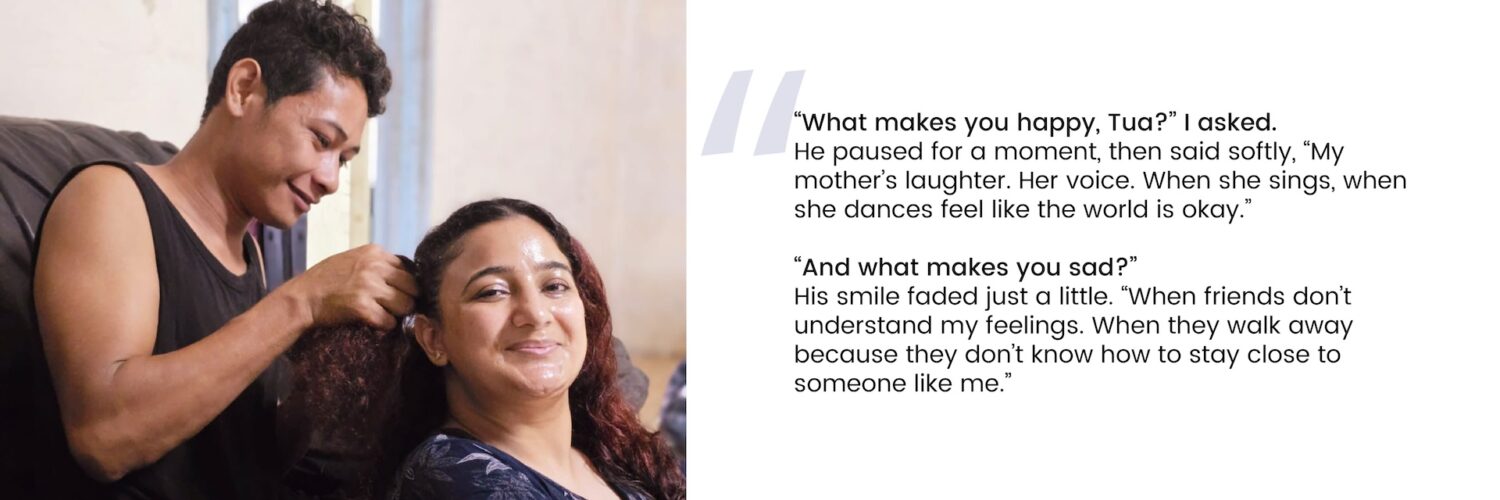
He gently gathered my hair and started braiding, his fingers careful and skilled.
“I used to have long hair once,” he said.
“But our religion doesn’t allow men even gay ones to grow it long.”
He didn’t sound angry. Just accepting. I didn’t question his belief, only respected it. Every culture has its rhythm, its boundaries, and its quiet negotiations with identity.
Then I asked softly, “If you could change any part of your body, would you?”
He paused.
“No,” he said firmly. “I’m happy as I am. But sometimes… I wonder. What if I was born fully female? With a chest like women, with menstruation… I think that would’ve been beautiful. But it’s okay. God gave me feelings and that’s enough. That makes me human.”
That was the clearest, strongest voice I had heard from him all day; full of grace, self-acceptance, and peace.
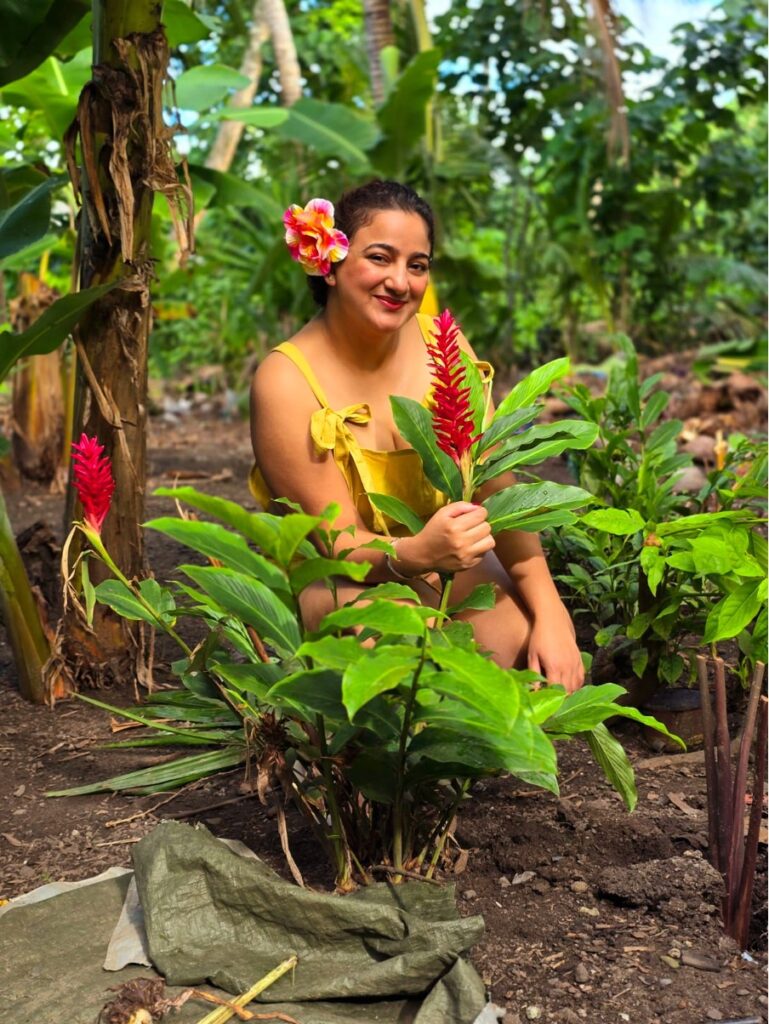
Back in school, we often heard about the Pacific Ocean. In textbooks, quiz questions, and the emotional metaphors of poems, stories, and essays, the Pacific Ocean kept appearing.
“What is the world’s largest and deepest ocean?”
We would immediately answer – The Pacific Ocean!
So many times in poems and stories, I compared characters to the Pacific: “They were calm, vast, and deep like the Pacific Ocean.”
Though I had never seen it, never felt its waves brush against my skin, the Pacific lived vividly in my imagination, a metaphor for depth, serenity, and mystery.
And quietly, I would wonder – Will I ever stand before this metaphor? Will I ever touch the ocean that shaped my words and dreams?
Years later, after arriving in Australia, I finally saw the Pacific Ocean with my own eyes. I stood before its vastness, ran my fingers through its waves, and felt its timeless presence. Coming from the towering heights of Mount Everest’s homeland, the moment felt almost surreal, a quiet, spiritual. The ocean’s endless expanse stirred something deep within me, a blend of wonder, gratitude, and peaceful stillness.
But even that profound encounter could not prepare me for what I would experience a few weeks ago in Samoa. Standing on that island, as I grew close to its people, a powerful truth unfolded before me; peace, kindness, depth, and vastness are not confined to water alone. They bloom equally within the fabric of human connection.
The warmth of the Samoan people confirmed this truth. Their gentle smiles, humble hearts, deep devotion to family, and genuine hospitality touched me like a soft flower tucked behind their ears , delicate yet resilient. Observing their way of life, I realized that happiness does not dwell in palaces, wealth, or luxury. True joy lives in the closeness of family, in heartfelt hospitality, and in cherishing life’s simple moments. We just have to learn to open our hearts to it.
And the Samoan people? They have mastered this art of happiness.
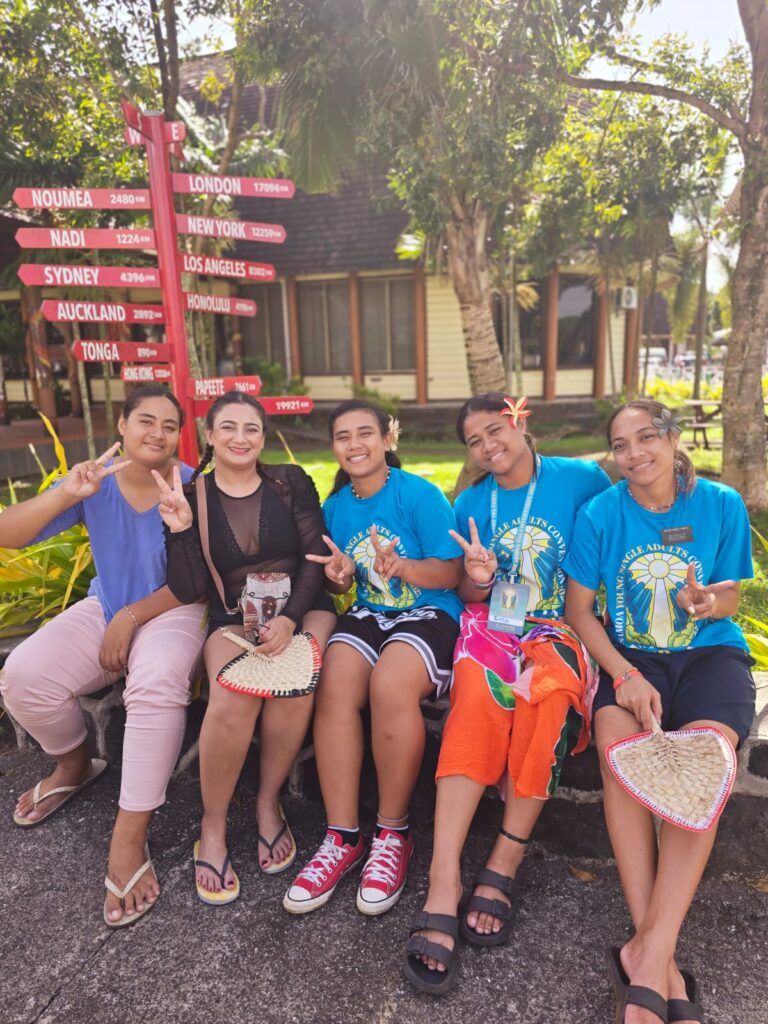
The Pacific Ocean is more than just water, it’s a whole world, brimming with islands and stories. Geographically and culturally, it’s divided into three regions: Melanesia, Micronesia, and Polynesia. Samoa belongs to Polynesia.
It was the second week of July, and amid the busy rhythm of work, my heart yearned for a pause not just a break, but a moment of meaningful silence. So, I traveled to Samoa, where work and leisure intertwined, offering me both purpose and space for the soul to breathe.
No matter which country I go to, I always wish to meet fellow Nepalis. Even in this unfamiliar island country, I hoped “May I meet at least a few Nepalis here.
Their version of “Atithi Devo Bhava” the belief that the guest is divine was woven deeply into the fabric of everyday life. Guests were welcomed with open hearts, treated with wholehearted warmth and respect. Love and care flowed abundantly, expressed through generous hospitality and freshly prepared food, shared with joy and pride.
Outside every home stood large open structures called “fale” simple yet profound spaces that instantly reminded me of the Pati and Pauwā from our own villages. But these fales were more than mere shelters; they were the heartbeats of the community; places where people gathered for ceremonies, shared stories, and held conversations beneath the vast, starlit sky.
Another fascinating custom was their burial practice. They bury loved ones right in their front yards, their graves built in cement, proudly displayed. The taller the grave, the more honored the person. Ancestors, they believe, guard the household, which is why homes are rarely sold. Their past lives on, not just in memory, but in the very soil they walk on.
In Samoa, churches stood at nearly every turn, their presence woven into the landscape like quiet guardians. Their faith in Christianity runs deep, but these churches are far more than places of worship, they are vibrant centers of social life, cultural celebration, and community togetherness.
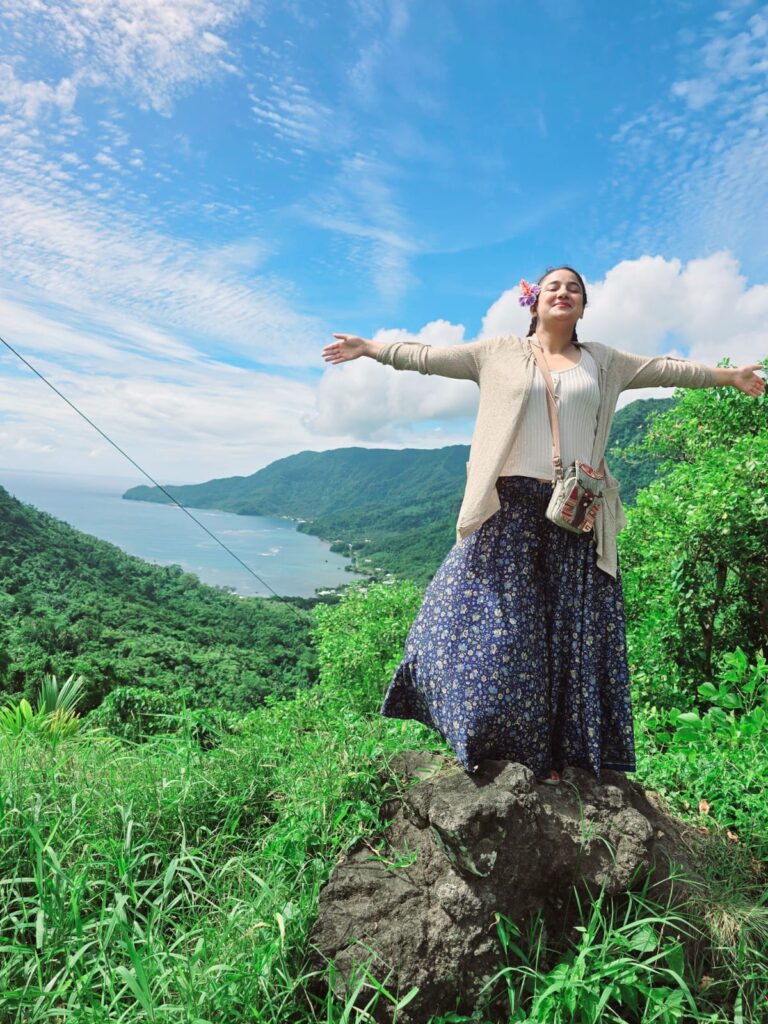
After Apia, we took a ferry to Savai’i, Samoa’s second-largest island– a paradise nestled in nature’s lap. Calm, lush, rhythmic waves of the sea, and the horizon where the sky met the ocean, time seemed to flow slower there.
We stayed in a village called Satua’ua. A small, warm village, where smiles greeted us everywhere, breezes were soft, and the sea sang lullabies at night.
In this village, I met ‘Anitelea Tautua Eneliko Tulia’
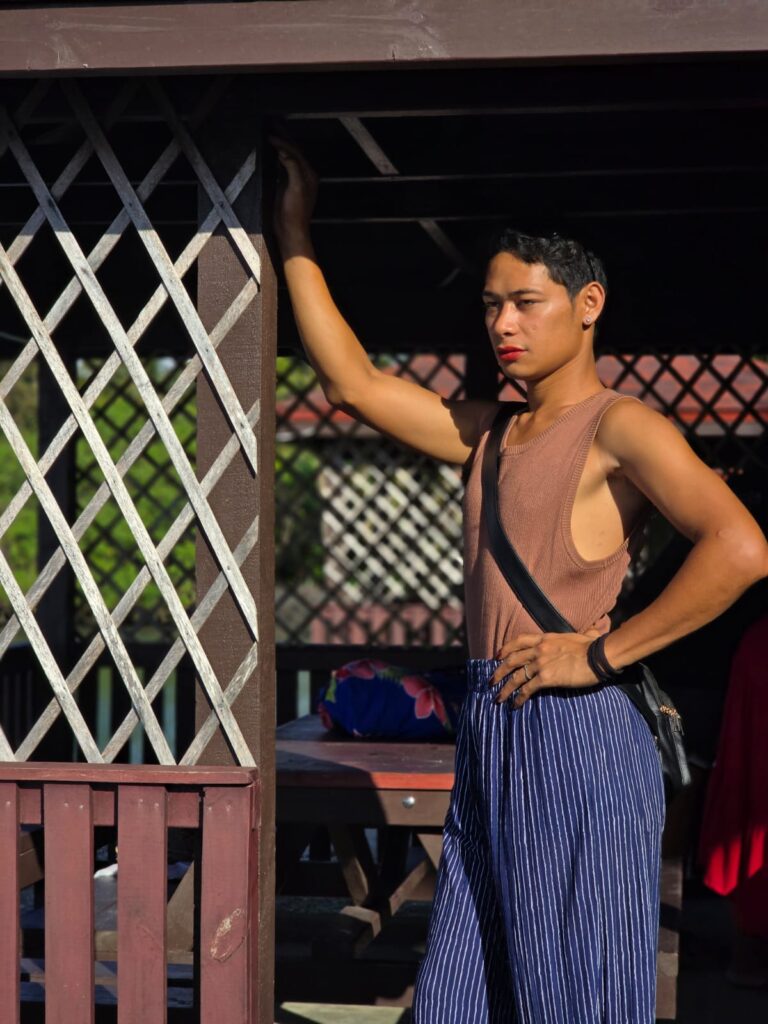
His full name was a long, complex one for me but heard everyone lovingly called him ‘Tua’. I had been searching for Nepalis but I found something even more profound: a new definition of humanity, warmth, and connection. Tua became a special chapter in my Samoa journey.
He lived next door, our neighbour. We stayed at his uncle’s home, where Tua was entrusted with the role of helping guests; cooking, caring, and guiding us alongside other family members. But he didn’t do it out of obligation; his kindness came from the heart. Tua was soft-spoken, gentle, and graceful – calm and steady, much like the Pacific Ocean itself.
When I asked his name out of courtesy, he smiled shyly and replied, “Tautua.”
I smiled back, “I’ll call you Tua, like everyone else, okay?”
He nodded his head and then he asked my name. “Niru,” I replied.
“Okay,” he smiled softly, and from that moment on, he liked to call me “Ni” a sweet, simple shortening of Niru.
Later, my dear friend Akenese who was also his sister-in-law and had become my like a soul sister during the trip, leaned in and whispered, “Do you know he’s gay?”
I just listened quietly, not reacting. Seeing this, she thought I hadn’t understood, so she added,
“He’s not just male or female. He’s gay.”
I smiled and turned to look at him. This time, Tua smiled – not shy, but with a quiet pride, a calm dignity in being truly seen. A confidence in his identity. I admired that confidence.
He wore a long T-shirt like a maxi dress. His nails were painted red, neatly filed.
“I like your nails,” I said.
He seemed surprised, then his face softened; a genuine, appreciative smile, and quietly returned to the kitchen.
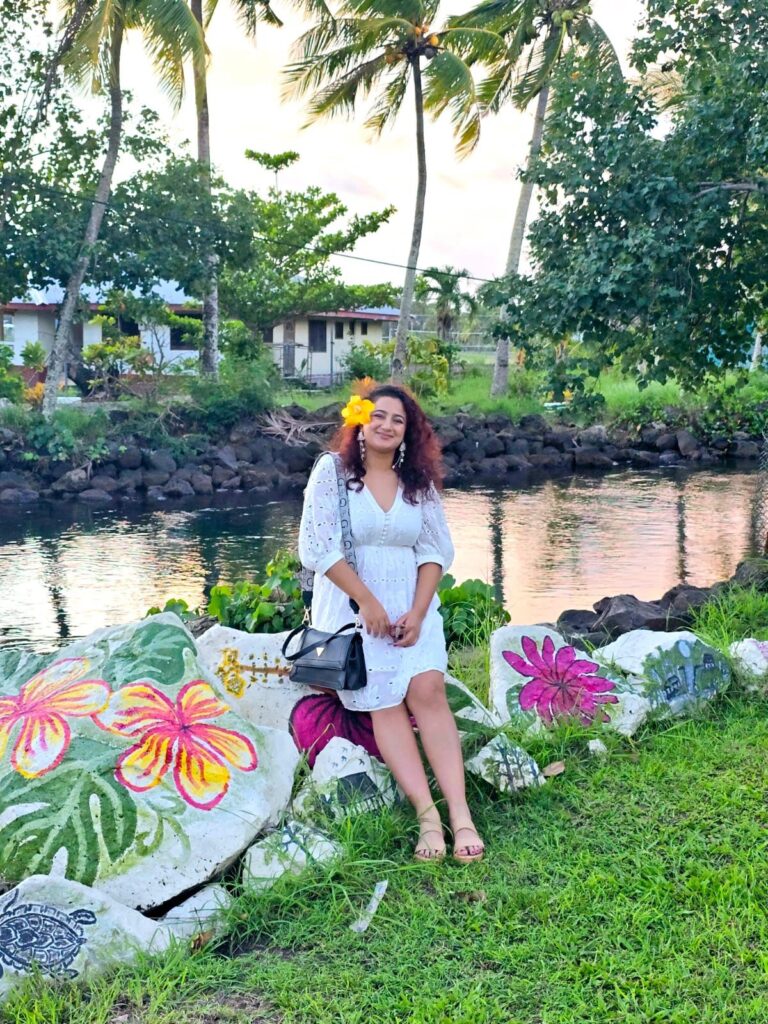
That evening, as the sunset dyed the sky orange and red, while chatting, he sat close to me, like a little sister leaning on an older one. It felt natural, comforting. The fan hummed softly in the background, and the rustle of palm trees added to the music of the night.
I turned to him and asked gently, “Tua, when did you realize you were different from your brothers?”
He looked puzzled, so Akenese translated in Samoan.
“In third grade,” he replied simply.
“Did your parents know?”
“I didn’t need to tell them,” he said. “They saw it in me – in the way I moved, the way I was. They just knew, without words.
Akenese added with a grin, “Not just him! One older brother and one younger brother are gay too.”
I blinked in amazement. “Wow! That’s rare and beautiful.”
“How many siblings do you have?” I asked.
He stretched out his hands and began counting on his fingers. “Thirteen. Six girls, four boys, and three of us who are gay.”
He smiled while pointing at each invisible sibling, and when he reached the eighth, he said “gay,” then again at the tenth, pointing to himself with a little nod and again at the twelfth. It wasn’t rehearsed. It was just… joyfully accepted.
“Do you know about LGBTQ?” I asked, curious.
He giggled softly. “No. I only know I’m gay.”
We all burst into laughter not the mocking kind, but that warm, shared laughter that breaks barriers.
“What makes you happy, Tua?” I asked.
He paused for a moment, then said softly, “My mother’s laughter. Her voice. When she sings, when she dances feel like the world is okay.”
“And what makes you sad?”
His smile faded just a little. “When friends don’t understand my feelings. When they walk away because they don’t know how to stay close to someone like me.”
Akenese reached over and held his hand. “But everyone here loves him,” she said.
I nodded. “I can see that.”
“What do you want to be when you grow older?”
“A teacher!” he said proudly.
“He already teaches,” Akenese added. “He volunteers at the primary school and earns a little 100 to 250 tala a month.”
That night, we stayed up talking under a ceiling fan that spun lazily, as dogs barked outside and the moon lit the garden like a dream. It reminded me of home of Nepal, of long chats under the stars with cousins during Festivals.
I asked Tua, “Do you know how to braid hair?”
He chuckled, “Of course. Want me to try?”
He gently gathered my hair and started braiding, his fingers careful and skilled.
“I used to have long hair once,” he said.
“But our religion doesn’t allow men even gay ones to grow it long.”
He didn’t sound angry. Just accepting. I didn’t question his belief, only respected it. Every culture has its rhythm, its boundaries, and its quiet negotiations with identity.
Then I asked softly, “If you could change any part of your body, would you?”
He paused.
“No,” he said firmly. “I’m happy as I am. But sometimes… I wonder. What if I was born fully female? With a chest like women, with menstruation… I think that would’ve been beautiful. But it’s okay. God gave me feelings and that’s enough. That makes me human.”
That was the clearest, strongest voice I had heard from him all day; full of grace, self-acceptance, and peace.
Before bed, he looked at me with sleepy eyes and said, “See you tomorrow,” and disappeared into the hallway.
That night, I lay awake, thinking, how peaceful he is. How content. Like the Pacific Ocean at dawn; calm, vast, and quietly deep.
The next evening, I walked to Tua’s home. I wanted to meet the woman whose laughter made him feel whole his mother.
While walking, Akenese turned to me and said, ”Tua has three homes.”
I imagined one must be a small room with a window, maybe a bed tucked in the corner, red lipstick and a mirror with scattered brushes; a private world where he could be himself. But when we arrived, it was nothing like I expected.
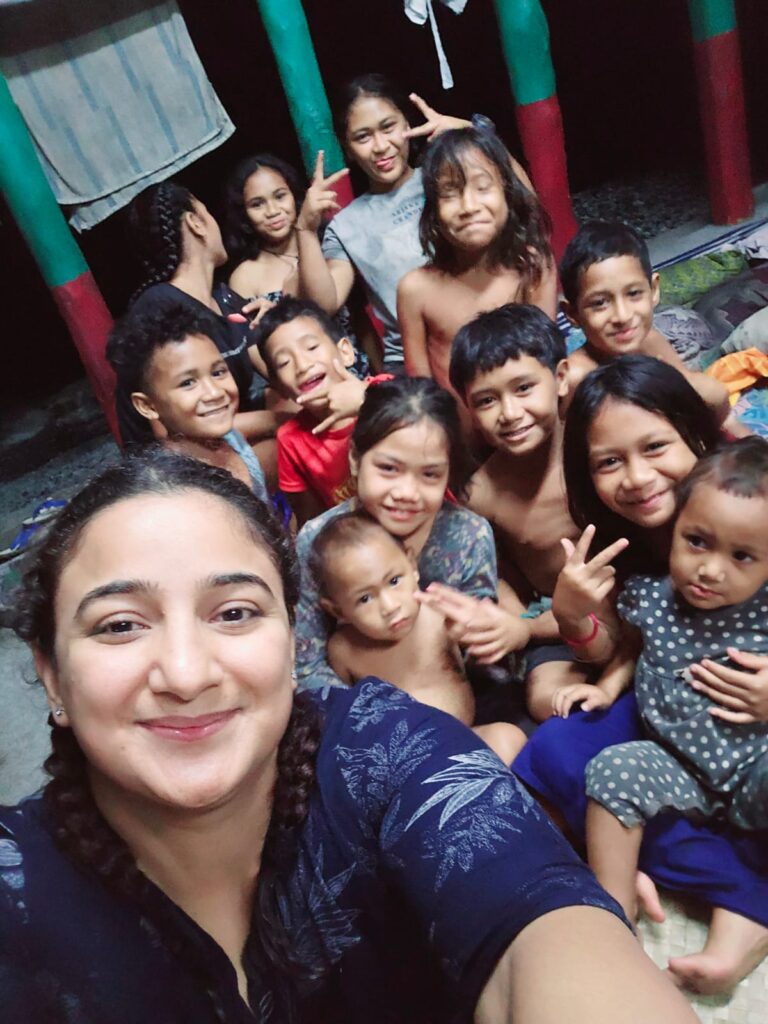
His “home” was a wide open fale; a traditional Samoan house with no walls, just wooden posts and woven mats across the floor. Around 15 to 20 people filled the space laughing, singing, preparing food, dancing. There were no boundaries just the sky above, the sea breeze flowing through, and hearts wide open.
They were all family; brothers, sisters, cousins, nieces, nephews. Some played music, others danced freely. Children giggled, some braided each other’s hair, while dinner simmered on a small stove nearby. It instantly reminded me of ‘Teej’ back in Nepal! that same spirit of festivity, laughter, and love. But here, it wasn’t just a celebration, this joy, this togetherness, was their everyday life. It wasn’t just a scene I witnessed ,it was one of the most beautiful visuals my heart has ever held.
When I stepped inside, the chatter softened. A few looked up curiously, others smiled shyly. Some kids ran behind pillars to hide, but soon curiosity pulled them close again. Among them stood Tua’s mother – graceful, warm, radiant. A woman whose presence wrapped around the house like a comforting shawl.
We danced together, laughed like old friends, and sat side by side as if we’d known each other forever. Her eyes softened as she looked around at her children all of them and with a quiet, steady pride, she said, “They are my treasures. My life.”
After losing her husband to a brain hemorrhage, she raised thirteen children on her own with strength, patience, and boundless love. Among her children, she is lovingly called “Our Great Mother,” and the moment you meet her, you understand why. There is a grace about her not loud, but deeply rooted.
I gently leaned in and asked about Tua and his brothers – all three of them being gay.
She didn’t blink, didn’t hesitate. Her eyes glowed as she said, “It doesn’t matter what people call them. They are my sons. They care for this family, they work hard, they love deeply. That is what matters. I raised them with pride, not shame.”
Her laughter that night was full; not just of happiness, but of deep, unconditional love. The kind that doesn’t just accept, but embraces.
Akenese added, “Even after long, tiring days, this family always finds time to dance, sing, and be together before bed.”
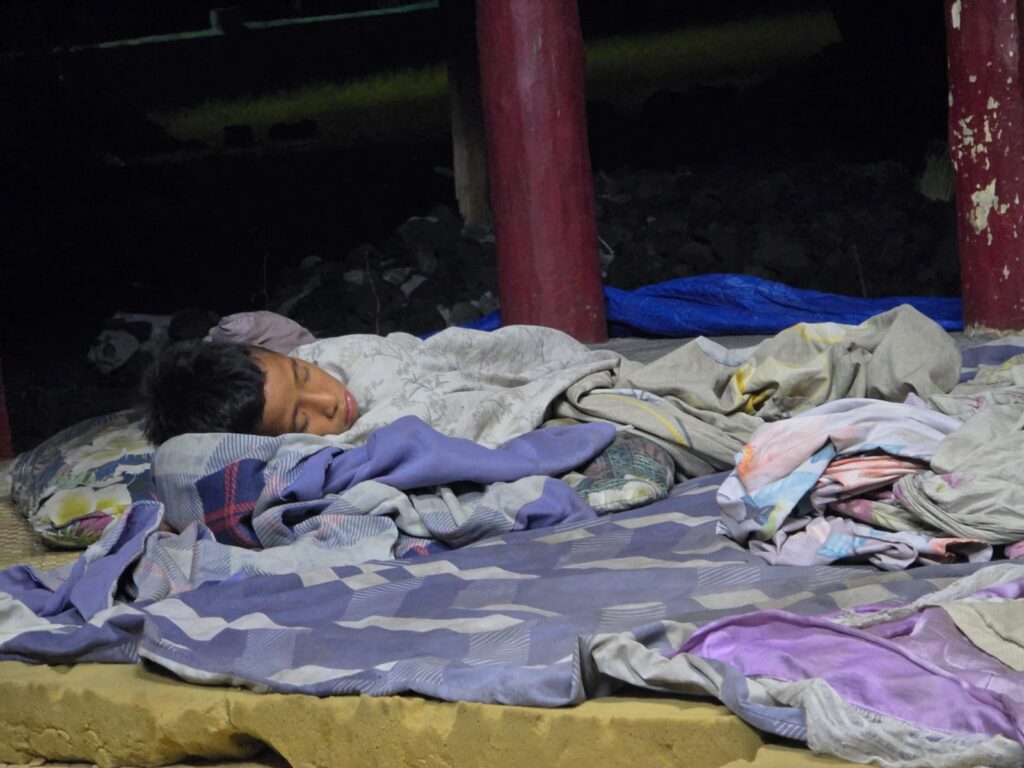
That night, I saw it. Kids twirling around with giggles, teenagers making cute faces, older siblings humming lullabies, some curled up and dozing off with arms around each other. No TV. No expensive toys. Just mats on the floor, shared food, and hearts overflowing with joy.
I thought, this is wealth. This is home. Not the things we collect, but the people who never let go of our hands, even when the world outside does.
After a few days, we returned to Apia. Tua joined us.
One night, I found him outside, leaning quietly against a wooden post, the streetlight casting soft shadows on his face.
“What’s wrong, Tua?” I asked gently.
He turned to me, his eyes moist but steady. “I miss home,” he whispered. “My siblings must be getting ready for bed now, laughing, playing, brushing each other’s hair… My mother must be calling someone to come eat. It’s the best time of the day.”
I nodded. I knew that feeling, that ache of missing someone, that invisible thread of love.
I remembered he didn’t have a phone, so I said softly, “Call her.”
Handing him mine.
He looked down, eyes gentle.
“She also doesn’t have a phone,” he murmured.
There was a pause. The air stood still.
Then, with a faint smile, he added,
“But we talk in the universe.”
Oh…
That line! it still hit my chest like a soft wave crashing. So simple. So pure.
I couldn’t hold it in. My tears rolled down.
He continued, voice trembling but sure,
“Whenever I sleep away from home, I hear her voice. Her laughter. Her footsteps. It’s like she’s right next to me.”
Then he looked at me with childlike honesty.
“That’s why I don’t like sleeping far.”
And in that moment, in his love, in his longing I saw what home really means.
I was suddenly transported back to Malekhu — Sixteen years old, on my first night in Kathmandu without mother and father, curled beneath a thin blanket, silently crying. Missing my mother’s warm hands, the scent of her cooking, the way she tucked my shawl tighter around my shoulders, like a gentle embrace.
And there I was, sitting side by side with Tua, two souls from different worlds, yet somehow stitched together by the same thread of longing, a love so strong it needs no words, no phones,
just quietly reaches across the distance.
That night, I called home, the mobile network flickering and weak, but my heart needed to reach out.
“Aama, I’ve realized, a mother’s love is the same everywhere. Whether you have one child or many, a mother loves them all equally.”
She smiled on the other end, her voice tender and full of warmth,
“How is Samoa, Niru?’
I answered her, “Even through the crackling connection, their hearts remain connected beyond words or signals.” She laughed, and I added more poetically, “Aama, Samoa is a place where even flowers bloom from stone.”





Add comment